


Unlock Significant Savings with Smart EV Charging
Adopting smart charging methods can help EV (fleet) owners substantially reduce their electricity expenses. By adapting the charging times and the power profiles to benefit from hourly electricity price fluctuations and limit capacity tariffs, you could save up to 25 % on yearly charging cost.
- Office Charging: Leverage smart charging to charge during the most advantageous hours.
- Home Charging: Implement smart chargers to charge during the most advantageous hours and limit the impact on capacity tariffs (where applicable).
Simulate your Fleet and Charging Behaviour – Estimate your Potential Savings
By entering details about your fleet of electric vehicles, where charging takes place (at home, at the office or at public charging locations), and the type of electricity contract used at your office location, our tool can estimate the potential savings from smart charging.
If you are unsure about any of the information—such as the type of contract or the average electricity cost—you need not worry. We have included market averages as default values, so you can still get an initial idea of your savings potential.
Simulate your fleet's potential savings
Fleet information
Fleet
Charging location
Number of employees charging at home
Office charging information
Simulation results

Office charging
Current cost
38,000 €
Optimized cost
33,600 €

Home charging
Current cost
72,600 €
Optimized cost
54,400 €
Total savings
22,700 €
Of which capacity tariff savings
6,350 €
These yearly results are based on a calculation over the year 2025, from 1st of January to end of June. See the other assumptions
Understanding Time-based electricity Tariffs & Smart Charging Technology
Time-based electricity tariffs are pricing models where the cost of electricity depends on when you use it. These contracts encourage consumers and businesses to shift their electricity consumption to times when energy is cheaper, supporting both cost savings and grid efficiency.
The two most common types are:
- Dynamic Electricity Tariffs:
These are pricing models that vary over time (on an hourly basis), typically reflecting fluctuations in market demand and supply. As these prices reflect the wholesale day-ahead electricity prices, these prices are published the day before. - Time of Use (ToU) Tariffs:
These tariffs divide the day into several fixed periods, each with its own fixed electricity price, typically based on patterns of high and low demand.
By understanding and utilising these tariffs, businesses can identify the most economical times to charge their EVs.
Smart Charging is a feature offered by several EV charging providers. It lets your electric vehicle charge automatically when electricity is cheapest or most sustainable. Instead of starting right away, your charge point waits for the best time—like during off-peak hours or when renewable energy is abundant. In addition to this, it also monitors the overall load on the grid and can limit the peak loads, thereby saving on capacity tariff fees. This saves you money, reduces grid pressure, and helps you use cleaner energy, all without extra effort. Just plug in and let smart charging do the work.
Features of Smart Charging:
- Automated scheduling:
Charge your vehicles when prices are lowest. - Real-time Monitoring:
Track electricity use and costs effectively - Energy Optimization:
Balance charging needs against grid demand for maximum savings.
As a result, combining dynamic tariffs with smart technologies creates a robust framework for reducing energy costs while supporting sustainable practices.
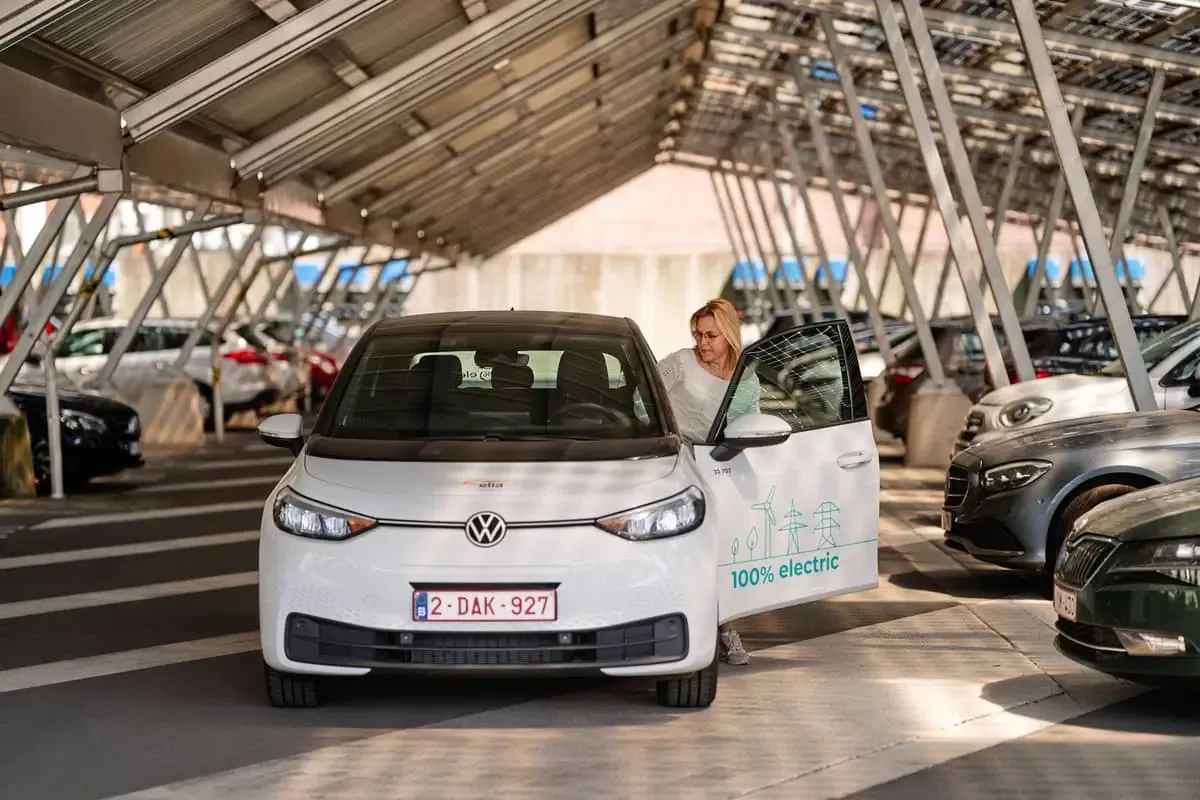
Concretely, how can you get these savings?
Workplace smart charging:
To achieve the results stated above, the charge points at your office locations need Smart charging that adapts to local constraints (e.g. max total charging capacity) as well as the grid and energy tariffs. This doesn’t necessarily require changing your existing charge points. Get in touch with your charge point operator to understand whether this is supported.
Then to benefit from the changed charging consumption profile, you need an electricity contract that charges consumption according to time-variable prices, these are called time-variable contracts (dynamic contracts or time-of-use variable contracts) and are offered by most major electricity providers.
Home smart charging:
There are currently two ways to set up smart home charging for company vehicles:
- Install a second meter in employees’ homes:
This allows a dedicated supply contract to be set up for the home charger, separate from the household’s main electricity supply. The contract for the home charger’s energy can be arranged by the employer, removing the need for home energy reimbursement procedures. This is possible in all regions, but it is important to note that if the home is currently equipped with an analogue energy meter, it will need to be replaced with a digital meter. The second meter must be installed directly next to the home’s digital meter. This requires an electrical installation, an electrical certification visit and a visit from the DSO (e.g. Fluvius) – all this typically cost around 2500€. Please be aware that, under this arrangement, employees will no longer be able to use their own solar generation for charging their electric vehicle. - Empower employees to use smart charging at home:
Employees driving a company EV can take advantage of smart charging solutions at home. If they have rooftop solar panels, the EV’s charging process can be optimised to maximise the use of self-generated solar energy. Furthermore, employees can opt for a time-dependent energy supply contract at home, allowing them to gain additional value from smart charging according to when electricity is cheapest. In this case, the saving is in the hands of the employee as the employer would still reimburse the charged volume at a flat rate. The employer could however lower the rate to capture some of the savings.
Frequently Asked Questions
What is the impact on the vehicle’s battery health?
There is no effect of the longevity or health of the battery. As the volumes of energy charged remains the same and since the charging speed does not increase relative to a non-smart charging scenario, any stress on the vehicle’s battery remains unchanged.
What does this mean for the driver?
Beside the installation of the correct equipment and contracts (see above), the driver doesn’t need to change their habits, except possibly getting used to a new CPO application . There are some habits however that will help maximise the value of the flexibility (see below).
How can I maximise the value of this flexibility for my fleet?
To ensure that the fleet of EV fully benefits from its flexibility potential, drivers can adopt some reflexes:
- Plug-in the whole time they are at a location or until the battery is full
- Avoid charging more than necessary at unflexible public charge points (currently only home or office locations can provide flexibility value for the fleet owner)
What kind of flexibility is this simulation based on?
The savings shown in the simulation derive from Day-Ahead price optimisation, i.e. charging at low prices rather than when prices are the highest. For home charging, some of the savings also derive from capacity tariff savings, thanks to peak shaving which delays charging when the home consumption (excluding EV charging) is already high.
Additional savings could be achieved, however. For instance, increasing self-consumption of home solar PV production would yield additional savings, although these savings would be in favour of the employee - The employer could however lower the rate to capture some of the savings.
Is there an impact on sustainability?
Yes! Charging when prices are low, means that the most efficient (therefore least CO2 emitting) power production assets are being used (think excess solar power pushing prices under zero during sunny summer days).
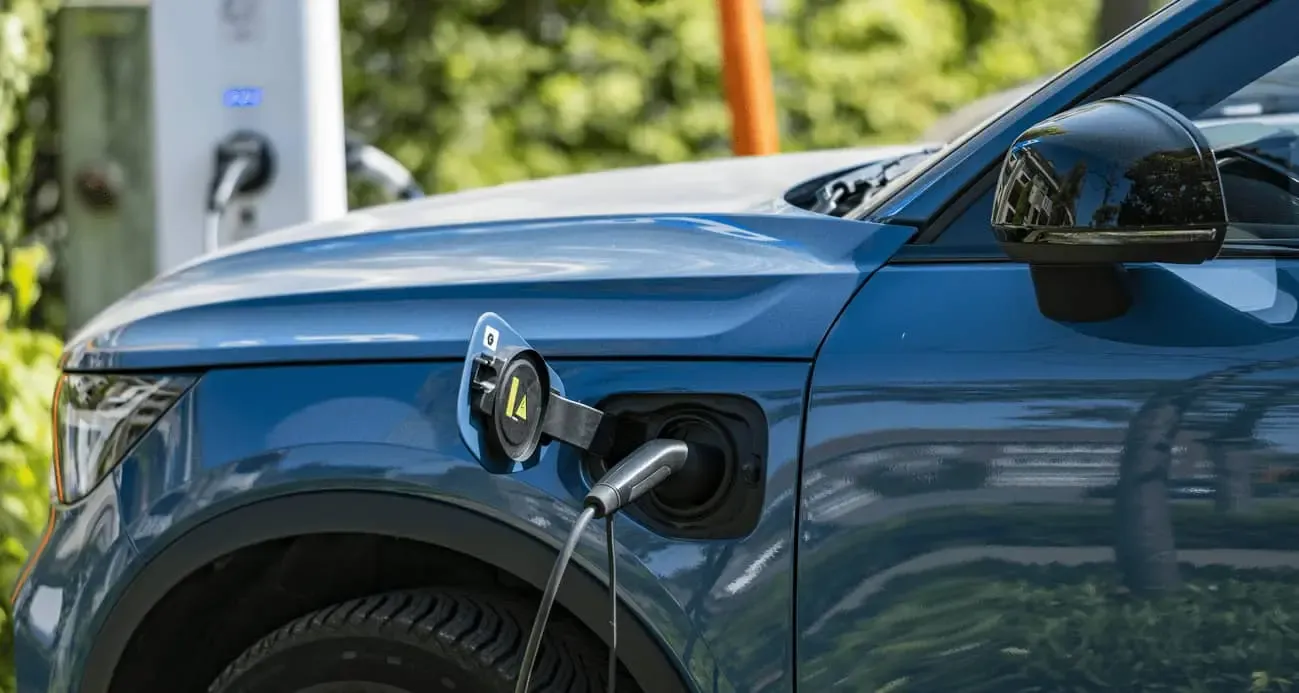
Assumptions of the calculation:
- Home charging is initially reimbursed at the average rate suggested by the CREG for the period
- The energy share of the electricity bill is estimated as the regional residential and SME averages as shared by the CREG
- Capacity tariff is applied to the stated % of home charging in Flanders, as the tariff doesn’t apply in other regions at the time of the publication
- The saving relative to the capacity tariff assumes that the peak consumption would be reduced by 3kW thanks to smart charging
- The optimised cost takes into account a supplier margin on the energy cost of 12%
The optimisation is made assuming that:
- The charging load is shifted while keeping reasonable comfort for the drivers, i.e. ensuring a minimal state of charge is achieved to allow unanticipated trips
- the minimum and maximum charging flexibility capacity is based on the analysis of 25 000 charge points across Belgium shared by 3 CPOs
Latest case studies
Let's hear what some professionals have to say about their use of flexibility services

